




You're not lost.
You're navigating a school system that was never explained to you.
Whether you just left a meeting feeling behind, a psycho-educational report just landed in your inbox, or high school is approaching and you're not sure the IEP will survive the transition, this is where that changes.
I help parents of neurodivergent teens understand the school system, advocate with confidence, and stop second-guessing themselves at 11pm.
YOU MIGHT BE HERE BECAUSE
This is uncharted territory. Of course you don't have a map.
Nobody teaches parents how the education system actually works: the language, the meetings, the decisions that get made before you've had a chance to catch up. These are the moments most parents describe when they reach out:
"I left the meeting not sure what was decided."
Things sounded official. You nodded. You're still not sure what your teen is actually entitled to.
"My teen got the diagnosis. But now what?"
High school is approaching. You have an IEP. You don't know if it's going to be enough.
"A report arrived and I don't know what it means."
Pages of terminology, no clear path forward, and a follow-up meeting already scheduled.
"At home, I'm walking on eggshells."
You love your teen but you don't always understand what they need. And the frustration goes both ways.
If any of that sounds familiar, you're not failing. Most parents were never shown how any of this works.

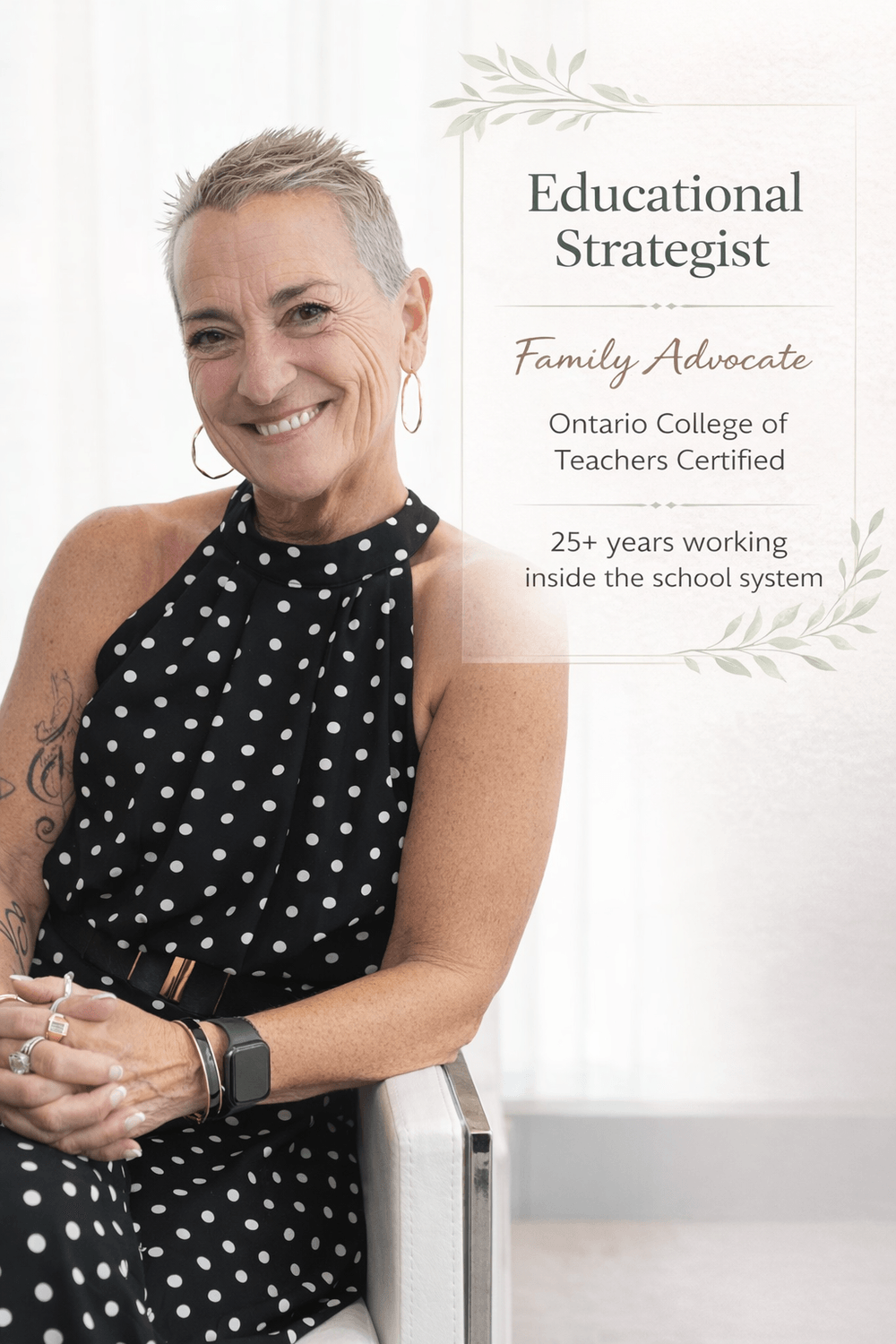
Hi, I'm Cheryl
I've spent 25 years inside the school system you're trying to figure out.
I'm not a lawyer preparing families for conflict. I'm not a tutor focused only on academics. I'm a certified educator and family advocate who understands how school decisions get made, how language in reports becomes action, and where it too often falls short.
My role is to bridge the space between what schools say and what families actually need in a way that's informed, steady, and collaborative.
Support that fits where you are right now
Some parents need help with one specific thing. Others are in a bigger season and need someone beside them the whole way. Both are the right reasons to reach out.

You have a meeting coming up or a report you need to understand
Right for you if: you need focused, practical help with something specific and soon.
I review your teen's IEP, assessment, or school situation and give you clear, actionable guidance — what it means, what to ask for, and how to walk into the next conversation prepared and steady.
From $275 CAD · Hourly and project-based options available
You want full support through a pivotal season, not just one meeting
Right for you if: high school is approaching, the diagnosis is recent, and you want someone beside you for the whole transition.
Over 90 days, I work with you to understand the full landscape: the assessment, the IEP, the school communication, and what's happening at home. You stop reacting to each development and start moving forward with a plan.
$3,500 CAD · Payment plans available · Applications reviewed within 48 hours
Not sure where to start? Start here — free.
The Grade 8 → Grade 9 Transition Checklist: a 10-step guide for parents of students with an IEP. Know exactly what to do, in the right order, before high school begins.

THE PODCAST
Parenting Teens: Advice Redefined for Today's Complex World
Real, raw conversations about what parents are actually dealing with: mental health, screens, identity, relationships, and raising teens in a world that looks nothing like the one we grew up in. Because we just can't parent the way our parents did.

Keep going.
Curious parents raise resilient teens.
Practical reads for parents in the thick of it

You're not parenting alone. Culture, peers, and the internet are raising your teen too. Cheryl Pankhurst on adapting your approach to the world your teenager actually lives in.

The conversation you've been avoiding is costing you more than you think. Cheryl Pankhurst on why the right time never comes and what to do instead.

Teens are dumbing down their own work to avoid looking like they used AI. Cheryl Pankhurst on ChatGPT, ADHD, and the conversation parents need to be having.

Need more personalized support?
If you'd like guidance specific to your teen's IEP, school situation, or transition plan, I work with families one-on-one.




Inspiration in your Inbox!